The Forge of Cyber Resilience for an Energy and Utilities Enterprise
A story of a regulated energy giant where a growing silent threat has been challenged and solved by our expertise, enabling the enterprise with resilient security in the age of uncertain and invisible threats.
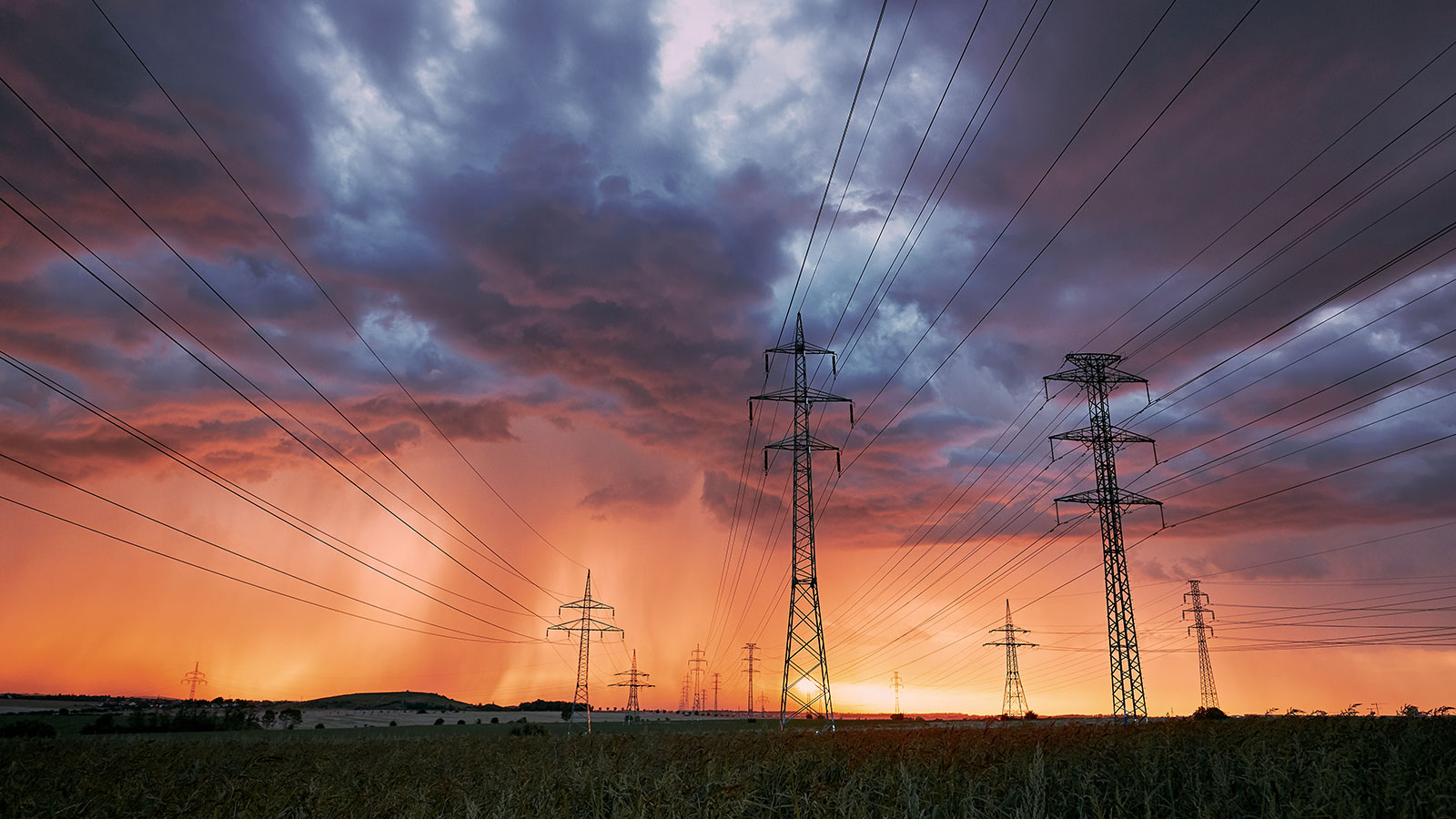
Imagine the weight of city’s lights resting on one’s shoulders. The servers in the data rooms of this large, regulated energy and utilities enterprise were not functioning enough across payroll and e-commerce platforms. They were running operational and infrastructure systems that kept power flowing across a significant portion of the grid. Every database, configuration, network identity stored on physical servers and were part of the invisible architecture that tuned for the modern environments.
For years, these servers did their quite amazing functioning until a time came when everything came to a halt. Here’s another success story on how an Energy and Utilities enterprise became cyber resilient with Infolob.
The Five Pretending Challenges
When working in a large, regulated enterprise, infrastructure risks appear in layers until combined risks pertain to vulnerabilities that are far more critical than any individual elements. The team identified what they were dealing with. It was a physical hardware failure moment that could wave to a cascade. At this moment, recovery would be rebuilding from scratch, a crisis that was unexpected and uncertain.
The second challenge was database backups and file-level archives were never designed with the thought of automated backup process.
The third layer of exposure was ransomware. The energy sector sat at the top of every threat actor’s target list, not because of the data on those servers but because of what those servers controlled. A successful ransomware event against a physical machine, with no clean image to restore from, was a weapon of extraordinary destructive power.
Coming to the fourth concern, it was network reconfiguration. Physical servers carry identities such as IP addresses, hostnames, service accounts, trust relationships woven invisibly through the enterprise fabric. A rebuild process that failed to restore those identities would not produce a working system. It would produce a complex reconstruction puzzle that IT teams would need to solve under conditions of maximum operational pressure.
And here is the fifth setback – regulatory and operational reality. Strict constraints and non-disruptiveness must be embedded throughout the implementation. And it had to be something that internal teams could eventually own, operate, and extend.
Thriving Partnership, Exceptional Delivery
When the decision was made to address the problem properly, the criteria for a delivery partner were unusually specific. A promise was made where there would be no production changes, big-bang cutovers, and downtime while the new world replaced the old. In the sensitive organization, everything seemed to be disruptive and uncertain. This is where a design partner was needed who could analyze granularly, define the architecture rigorously, and validate the approach through a controlled proof of concept, and provide a framework that the internal team could trust and deliver.
Infolob was engaged with a disciplinary implementation approach that rained significant outcomes.
Crafting the Blueprint
The work unfolded in layers, each one building on the last with the careful sequencing of a team that understood the stakes.
- Inventory Analysis: Conducted a thorough analysis of the physical server inventory, every machine targeted for preservation, its role, its dependencies, its network identity, its criticality. This was a forensic examination of the infrastructure that the organization’s operations depend upon. The goal was a clear, documented map of uncompromised excellence.
- Tool Selection: Evaluated the landscape with the tools that were capable of Physical-to-Virtual Conversion (p2V) for capturing complete server states, Virtual-to-Physical (V2P) restoration for returning those states to physical hardware when needed, and Virtual-to-Virtual (V2V) movement for cloud and hybrid scenarios. The selection criteria must deliver reliability and compatibility as expected.
- Architecture Design: With the inventory mapped and the tools selected, the team designed the preservation architecture itself. The model leveraged both on-premises storage and cloud storage options, giving the organization flexibility in where preserved images would live and resilience against the single-point-of-failure risk that had originally motivated the engagement.
- Proof-of-Concept: We ran a PoC for a controlled, non-production test in which a representative server’s complete state was preserved and then fully restored.
- Documentation: A long-lasting value has been established with the quality of documentation. Our team produced detailed, operationally ready preservation and recovery process documentation so that internal team would own the solution. The documentation covered step-by-step procedures, decision trees, rollback guidance, and snapshot timing recommendations.
Engaged Transformation for Maximum Impact
The three-month engagement ended as cleanly as it had begun with no production incidents, no unplanned outages, and no scope surprises. And in its wake, something material had shifted in the organization’s posture – a resilient ecosystem.
But perhaps the most important transformation was in the organization’s relationship with future investment. What had been designed was a foundation. A Phase-1 implementation that anticipates Phase 2 and beyond. Designed to scale from a proof of concept on a representative server to enterprise-wide rollout across the full server inventory. Leadership now had a clear, costed, validated roadmap for how to get there.
Resilient is a design choice as the servers still hum the best and lights shine bright. There is now a preservation and recovery framework that did not exist three months ago.
Now, what’s your strategy to become cyber resilient with a scalable roadmap.