








IT Estate Modernization and Cloud Migration Services
Value-driven IT estate modernization is a continual process that determines the success of all enterprises. INFOLOB, with end-to-end digital transformation expertise, helps its clients stay future ready with white glove services pertaining to cloud migration, hardware and software upgrades, system consolidations, microservices, data management and analytics, and more.
Talk to Infolob Migration Experts Today
Stretching hardware and software beyond their lifespan is invitation to trouble of various kinds. It can also curtail performance and obstruct innovation. Timely upgrade of servers, storage systems, and firewalls as well as software such as operating systems, databases, and Virtualization systems that your enterprise depends on is often mission critical.
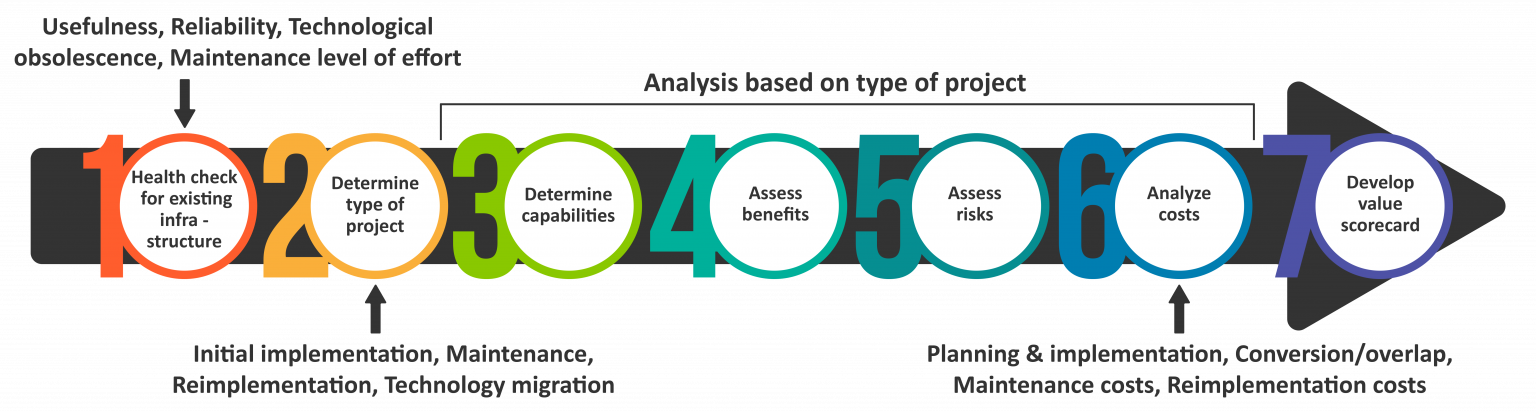
INFOLOB helps enterprise IT leaders with the exact support they need to modernize their IT estate with a keen focus on current and future requirements as well as return on investments (value scorecard). Our IT infrastructure upgrade services rest on the following framework:
Analysis Factors for Different Types of Infrastructure Projects
| Initial Implementation | Maintenance and Upgrade | Reimplementation | Technology Migration | |
|---|---|---|---|---|
| Capabilities | Basic capabilities | Additional capabilities | New design | Old capabilities vs. new capabilities |
| Benefits | To different constituencies | Use of anecdotes | Reliability and performance improvements | Capability, reliability, and performance improvements |
| Risks | New technology acceptance | Impact of upcoming technology shift | Impact on related infrastructure and systems | New technology acceptance |
| Costs | Maintaining prior infrastructure | Cost changes with maintenance frequency Maintenance costs vs. replacement costs | Impact on related infrastructure and systems | Phased cost model Migration costs |
IT Systems Consolidation and Standardization Made Easy
INFOLOB’s end-to-end IT support partnership for its clients includes undertaking the responsibilities of IT systems consolidation and standardization, which aspires to deliver value with systems’ complexity reduction and meeting regulatory protocols that the industry or country the client enterprise operates under. This typically involves:
- Evaluation of existing systems to determine the goals, requirements, and scope of the consolidation and standardization project.
- Integration and migration of disparate systems into a single, cohesive platform, and moving data and processes to the new system.
- Establishing common standards, protocols, and practices across systems, applications, and infrastructure.
- Optimization in terms of improved efficiency, opportunities of scalability, and reliability of the consolidated and standardized system.
- Providing ongoing support, maintenance, and continuous improvement of the consolidated and standardized system.
- Ensuring the security, privacy, and regulatory compliance of the consolidated and standardized system.
Key Considerations for IT Systems’ Consolidation
Security
Single sign-on solution must be achieved with a centralized user management that holds seamless navigations across workloads.
Integration
Having a middleware layer ensures coupling between web apps and back-end systems as well as helps onboarding new apps in the future.
Content Migration
Concentrate content across systems to reduce operational effort of maintaining multiple CMS.
User Interface
New look, lightweight, responsive, and consolidated portal helps increase user engagement.
Data Migration
Importing and consolidating all data in a well-planned manner is mission critical.
Infrastructure
While selecting new hardware is important, reusing existing systems that can continue can save significant investments.
Cloud Migration Services
Oracle Cloud Infrastructure (OCI) is one stop shop for enterprise IT leaders who are looking for reliable, secure, and powerful management tools for their sophisticated, expansive, and complex deployments. Plus, for existing Oracle customers, there are irresistible pricing benefits besides the reliance of renowned Oracle performance. And then, there are first-of-a-kind Oracle Autonomous Services.
Infolob attests that OCI is one-of-a-kind platform that is strategically developed for all small and large companies by veteran cloud industry practitioners to meet enterprise-grade computing requirements, support mission-critical and high-volume workloads, and deliver core cloud benefits of competitive cost, rapid provisioning, unbeatable performance, and nearly limitless scale.
Infolob Oracle Cloud Services
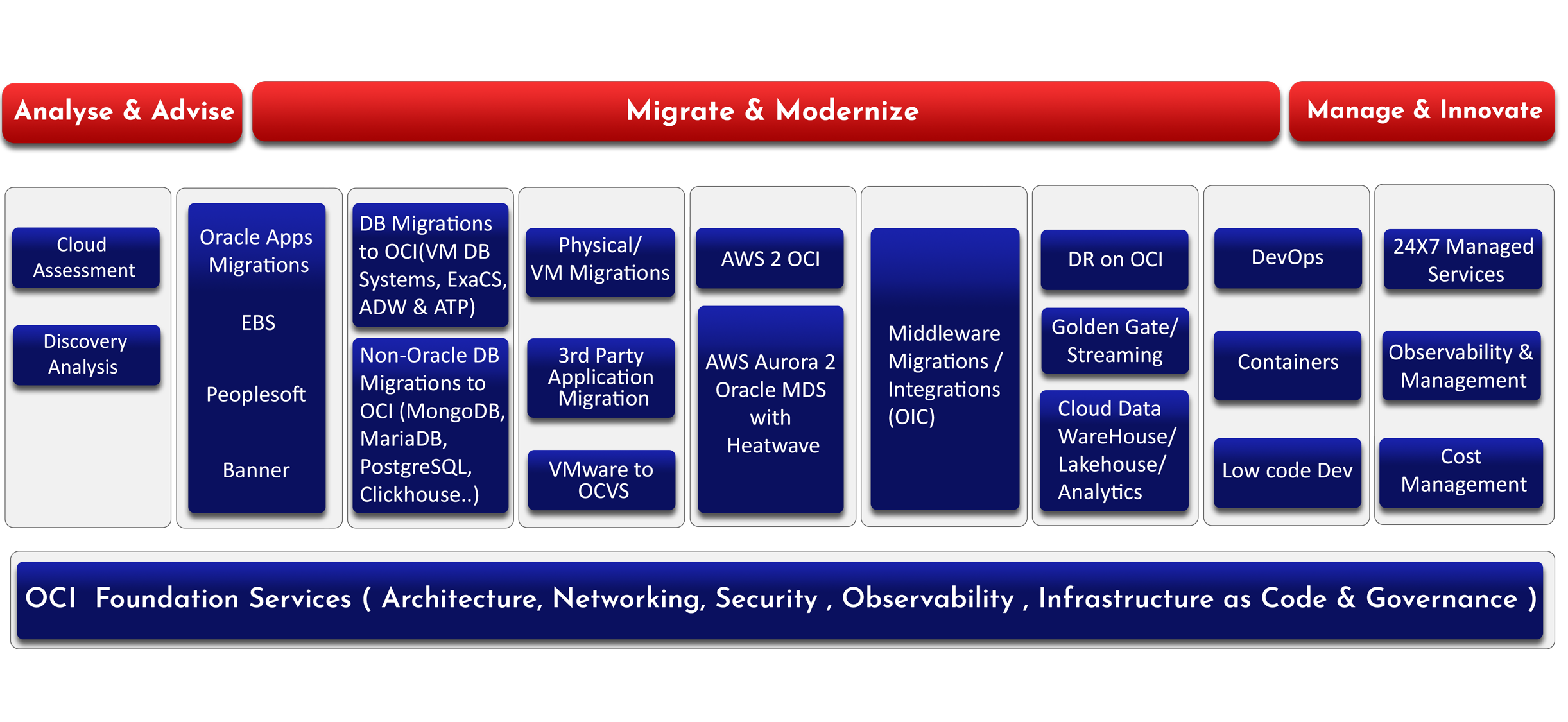
More than digital transformation—we deliver business transformation—which we believe manifests in the form of optimized operations and estimated ROI. And we do this via our unparalleled Oracle Cloud expertise and award-winning managed services. Our smarts to understand your business, integrate IT architectures and technology tools, and serve people-first approach undertakes end-to-end responsibility of your cloud journey, and its maintenance thereafter.
Analyse and Advise
While several aspects of most organizations are same, there are, invariably, numerous uniqueness in how one operates. Consequently, our primary emphasis is on analysing your core requirements and then advising solutions while keeping economics and easy employee adoption in mind. Our experts help you identify which among various cloud services (public, private, multi, hybrid) best suits today and will keep you future ready.
Migrate and Modernize
Experience our Midas touch as we amalgamate our own set of industry lessons with the latest cloud migration best practices of data center workloads. And while we are at it, our experts help you modernize to a cloud-first organization by installing a foundation for growth and future innovation.
Manage and Innovate
Leverage our cloud managed services and cyber security solutions to overcome challenges of managing complex cloud environments while abiding by regulatory compliances. Furthermore, we foster innovation by developing cloud applications with the power of open source that are flexible, reliable, and scalable on-demand.
Infolob Oracle Cloud Migration Framework
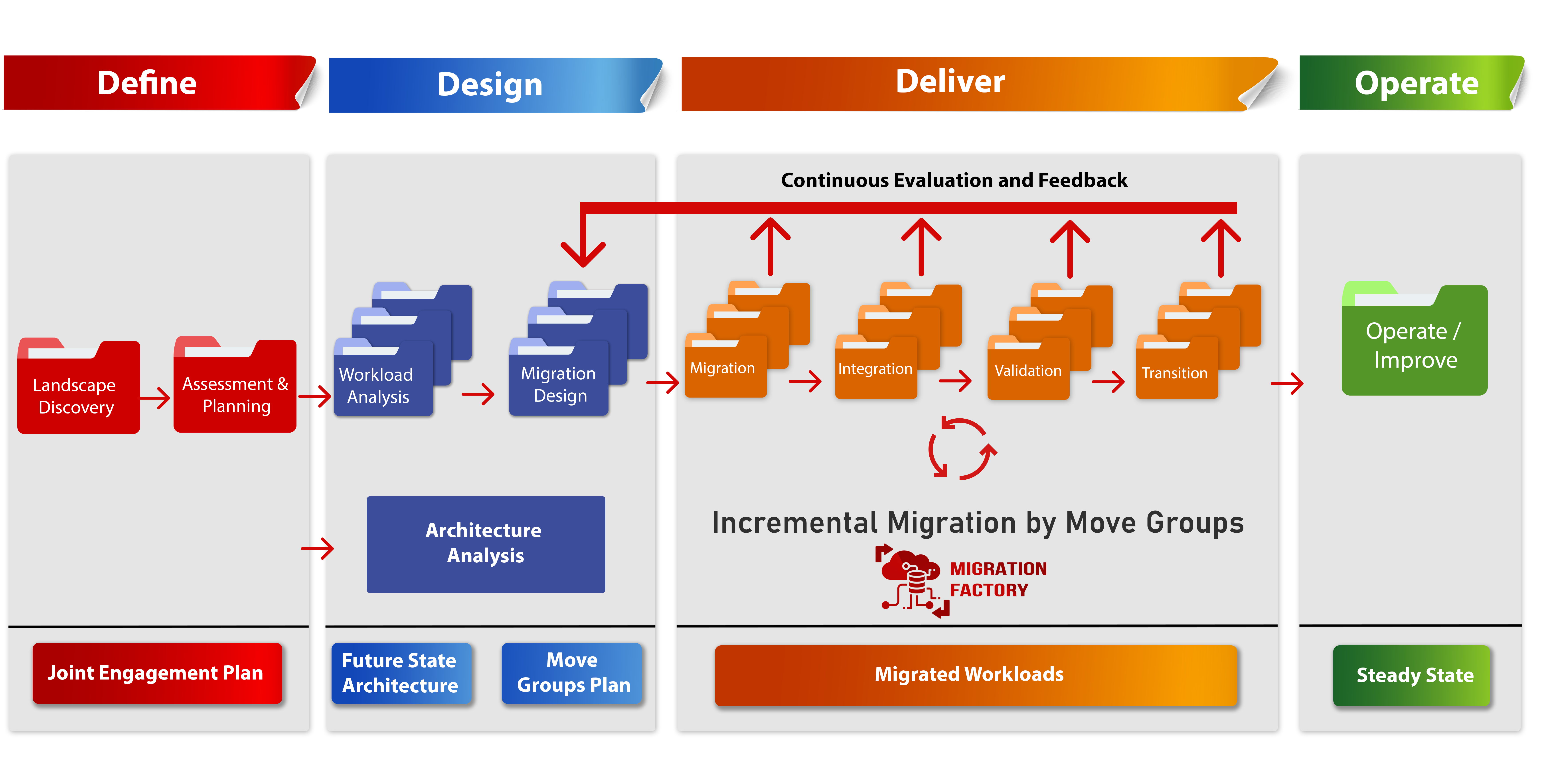
Our Oracle Cloud Migration Framework is a light-weight process for cloud solutioning, adoption, deployment, and success that aligns with our customer’s cloud adoption lifecycle. It is an outcome-based iterative process that fits all types of digital transformation projects across technologies as well as large data center migrations. Moreover, it provides regular feedback checks to ensure the direction and business value from assumptions are correct. Our feature-rich Framework consists of following three phases:

DEFINE
We bring in our elite expertise to identify and understand your current business challenges. This investigative stage is among our specialities as our cloud architects come with decades of industry experience, are Oracle certified, and have delivered numerous admirable projects before. Though we do offer free assessments in some cases, this stage formally begins once the joint engagement plan with details of resources required is agreed upon.

DESIGN
We explore where you are today and use it as a starting point to design a solution to the point of view. Consider all constraints, architecture principles, and future state ambitions to ensure that the solution is in line with the organization's strategic goals. Outcome of this phase will be based on multiple workshops and deep discovery cutting across business, technology, and applications with a three-dimension analysis to arrive at the Future State Architecture and Move Groups plan.

DELIVER
We execute the plan formulated in the design phase with the Migration Factory approach explained above, which is among the top-rated Oracle best practices. Our true expertise is displayed at this stage as we utilize multiple tools and IPs based on Move Groups in an incremental migration approach performing Migration, Integration, Validation, and Testing in Parallel groups. Each stage has continuous evaluation and feedback loop to learn and improve the overall process in an agile way.
Adopt Virtualization, Containers, and Microservices
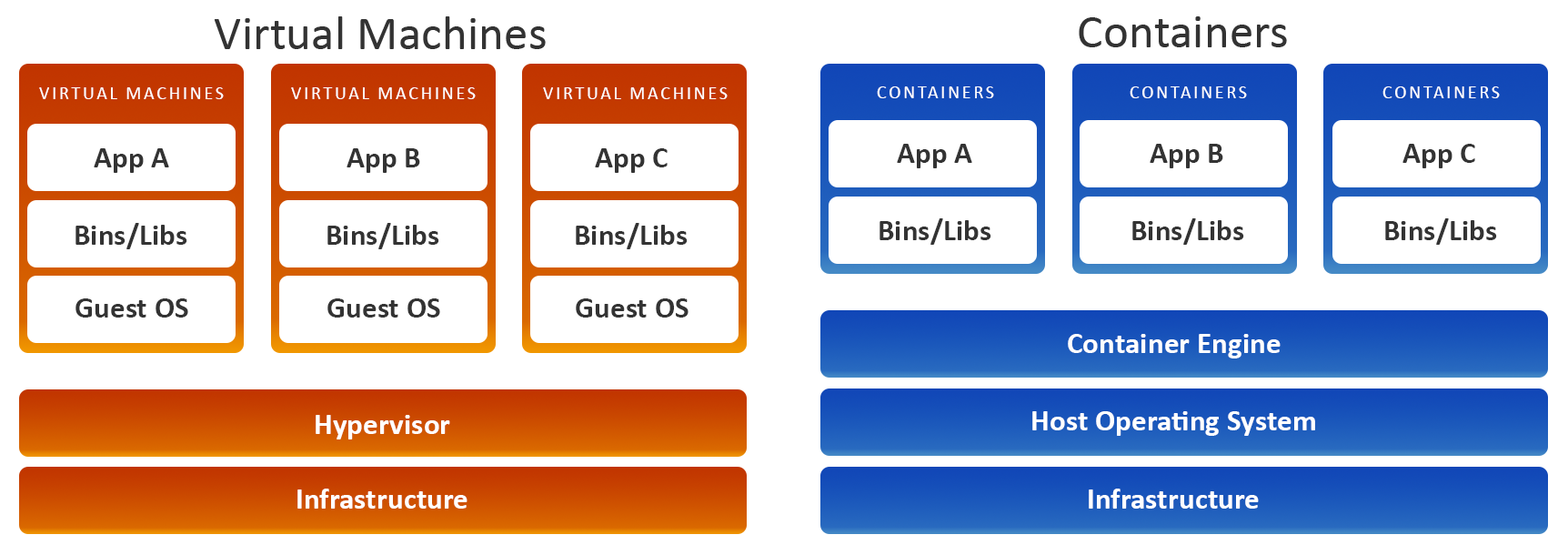
Among the most cutting-edge technologies in terms of IT system modernization, spanning across software development and infrastructure management, are virtualization, containerization, and microservices. These technologies help enterprises improve the efficiency, reliability, and scalability of their IT systems as well as reduce costs and improve the speed of appdev and deployment.
Virtualization: Creation of virtual versions of physical resources such as servers, operating systems, and applications. It enables the creation of virtual environments in which multiple systems can run independently on a single physical machine. This results in increased efficiency, reduced costs, and greater flexibility for IT organizations.
Containerization: A form of virtualization that provides a lightweight way to package and distribute applications. Containers are self-contained units that include everything an application needs to run, such as code, libraries, and dependencies. This makes it easier to deploy and run applications on different platforms, without worrying about compatibility issues.
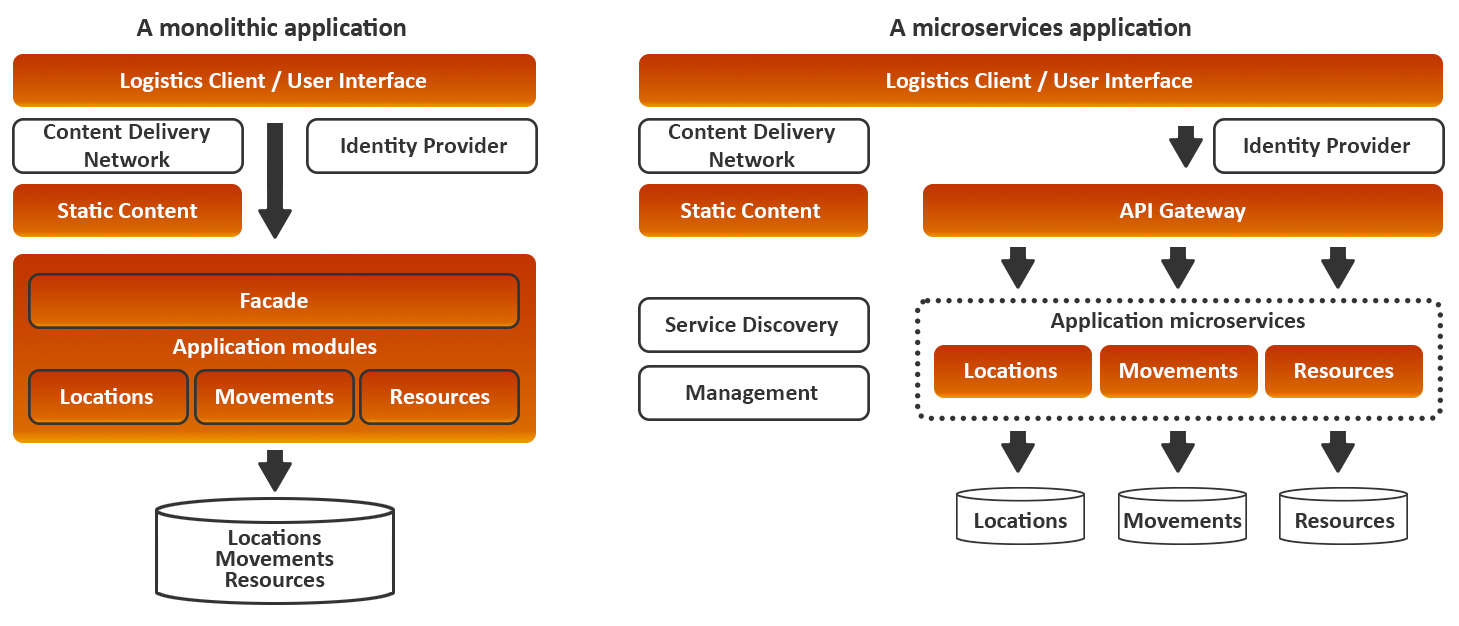
Microservices: An architecture style in which an application is broken down into smaller, independent services that communicate with each other through APIs. This approach enables organizations to build and deploy complex applications faster, with greater agility and scalability. Additionally, it makes it easier to maintain and update individual components, without affecting the rest of the application.
Microservices: Things to Know
Automate and Smartly Orchestrate Performant IT Operations
INFOLOB addresses the need for automation and IT operations optimization with a keen focus on improved performance, efficiency, and agility while delivering benefits of lowered OPEX. Typically, the steps include:
- Assessment of the current IT infrastructure and operations to identify areas for automation and optimization.
- Automation of repetitive tasks and processes to reduce manual errors, increase efficiency, and free up resources.
- Implementation of IT Operations Management (ITOM) monitor and manage all IT assets, services, and processes.
- Implementation an event management system that can detect and respond to IT incidents, and trigger automated responses to resolve issues quickly.
- Development of a configuration management system to keep track of the configuration of all IT assets, and ensure that changes to configuration are automatically documented and auditable.
- Monitoring the performance of IT assets and infrastructure to detect potential performance issues, and trigger automated responses to resolve them.
- Implementation of an IT service management (ITSM) system to manage the lifecycle of IT services, from design and implementation to retirement.
Enhance Data Management and Analytics Capabilities
Data is a valuable asset for any enterprise, and effective data management and analytics can help organizations unlock insights, make informed decisions, and drive growth. Following is how INFOLOB can help:
- Centralized, Cloud-based Data Storage
By centralizing data storage with the cloud technology, enterprises can ensure that all data is in one location and can be easily accessed for analysis. This helps to avoid data silos and makes it easier to consolidate data from multiple sources. Moreover, cloud makes scalability easy, lowers the cost of storage, and makes data available anywhere, at any time.
2. Implement Data Governance Policies
Data governance policies can help ensure data quality, security, and compliance with relevant regulations. This includes setting standards for data entry, storage, and access, as well as ensuring that data is kept confidential and secure.
3. Choose Your Perfect Data Management Tool(s)
Tools such as data warehouses, data lakes, and ETL (Extract, Transform, Load) systems can help automate and streamline the process of managing data. By investing in these tools, enterprises can improve their data management processes and make it easier to access data for analysis.
4. Adopt a Data-Driven Culture
Encouraging data literacy and data-driven decision making across the organization can help ensure that all employees understand the value of data and can contribute to data analysis and insights. By promoting a data-driven culture, enterprises can ensure that data is used effectively throughout the organization.
5. Leverage Out Skilled Data Analytics Team
Hiring data scientists, data engineers, and business intelligence professionals with relevant expertise can help ensure that enterprises have the necessary skills to effectively manage and analyze data. This investment in human capital can help drive innovation and growth within the organization.